
By: Hannah Shoaf, DO
Editor’s Note: This is the summary of a research article by Kelly et al titled, “Clinician Perceptions of Providing Natural Family Planning Methods in Title X Funded Clinics.” [1] Although it’s an older article with a small sample size and a homogeneous population, the study highlights barriers that keep clinicians from educating their patients about fertility awareness-based methods (FABMs). Dr. Hannah Shoaf summarized their findings during the fertility awareness elective for medical students offered by FACTS through Georgetown University. Through this online elective, over a thousand medical students have learned about FABMs, and growing numbers of physicians in practice are now equipped to give patients access to restorative reproductive medicine and more options for family planning. Registration for the elective is now open for the 2025-26 academic year; apply today!
Introduction
Fertility awareness-based methods (FABMs) provide advantages for women who seek to learn more about their physiology and take charge of family planning while avoiding potential side effects of hormonal birth control. FABMs enable a woman and her partner to understand the female cycle and fertility window, giving them more options that are safe and effective to achieve or avoid pregnancy depending on their goals. Beyond the absence of side effects, FABMs are inexpensive and accessible. Additionally, women can learn to chart their cycles using these methods, and FABM-trained physicians can study their individual charts to diagnose and treat common women’s health conditions.
“FABMs enable a woman and her partner to understand the female cycle and fertility window, giving them more options that are safe and effective to achieve or avoid pregnancy depending on their goals.”
Kelly et al were interested in FABMs in the context of Title X funded clinics. [1] For more than fifty years, the U.S. Department of Health & Human Services (HHS) has established family planning clinics that offer care to low income and uninsured patients through Title X grants. Whereas a study [2] published in 2010 revealed almost a quarter of women used FABMs as a family planning method, only 1% of women seeking contraceptive services from Title X clinics used these methods. [3] In the study by Kelly et al [1] summarized below, clinicians who work at such clinics were interviewed by phone to identify and understand the reasons for this discrepancy.
Methodology
This study was completed through telephone focus groups with 29 experienced family planning clinicians employed by Title X clinics. These preceptors had been trained by the Department of HHS/Office of Population Affairs/Office of Family Planning-funded Clinical Training Center for Family Planning. The investigators contacted prospective participants in all 50 states, Puerto Rico, and Guam after an email invitation to contact a toll-free number to complete interviews at scheduled times. The interview questions sought to determine the participant’s perceptions of different FABMs, the feasibility of offering such methods in their respective clinics, and how they compare to other family planning methods.
Results
Six focus groups were completed, including one in Spanish. Each focus group consisted of 5 or 6 women’s health clinicians, including physicians, physician assistants, nurse practitioners, and midwives. The investigators noted two overarching themes in their responses: a commitment to educate patients about how the human body works and a desire to teach them how to manage their fertility.
Despite this commitment to educate their patients, various challenges impacted their ability to teach about FABMs effectively. For example, clinicians were hesitant to offer such family planning methods to patients who did not realize a fertile period exists and did not know the date of their last menstrual period. Other barriers to offering FABMs included patient age, cycle regularity, and being in a monogamous relationship. Some individuals seemed to experience enough barriers simply to establish and arrive at their appointment, so clinicians considered it inefficient to offer them a method that required ample teaching. A lack of teaching resources and sufficient time at each visit were additional hurdles when considering FABMs for patients in title X clinics.

“Barriers to offering FABMs included patient age, cycle regularity, and being in a monogamous relationship. A lack of teaching resources and sufficient time at each visit were additional hurdles when considering FABMs.”
Discussion
Title X funded clinics in the United States offer care to more than 4 million women and their families. [4] While FABMs offer a low-cost option for patients at these clinics, the study by Kelly et al revealed multiple obstacles that prevent clinicians from readily offering such safe, effective, evidence-based methods.
The investigators noted none of the clinicians cited websites or phone applications (apps) that assist in teaching FABMs. Being able to show patients an app or send them to a website to connect with a trained instructor may help overcome the lack of both time and teaching resources available. An important lesson from these focus groups is that to empower women to manage their fertility, they should be offered all available methods regardless of their marital status, age or cycle regularity. Assumptions about which family planning method or approach may be best for patients prior to discussions with them do not respect patient autonomy and bypass shared decision making.
“An important lesson from these focus groups is that to empower women to manage their fertility, they should be offered all available methods regardless of their marital status, age or cycle regularity.”
This study included 29 clinicians, mostly white women, out of 4,000 U.S. clinics, offering only a snapshot of perceptions across the country. It relied on focus group responses and did not look at patient encounter data or fertility outcomes. Yet, the study did highlight the challenge of providing fertility counseling while practicing in a busy clinic with limited time and resources, an obstacle many clinicians face. While time is a difficult limitation to overcome, these clinics would benefit from educational resources such as multilingual handouts and information regarding reliable fertility-tracking apps. Additional research should assess the perceptions of more diverse clinicians in a variety of settings.
This study points to an opportunity to offer FABMs to more patients as well as the need to support Title X funded clinics so their clinicians are better equipped to do so. FABMs offer low-cost methods for patients to learn about their physiology and plan their families more effectively. Patients who receive care at Title X funded clinics would benefit from access to FABM education and the opportunity these methods provide to learn about and manage their fertility.
References
[1] Kelly PJ, Witt J, McEvers K, Enriquez M, Abshier P, Vasquez M, McGee E. Clinician perceptions of providing natural family planning methods in Title X funded clinics. J Midwifery Womens Health. 2012 Jan-Feb;57(1):35-42. doi: 10.1111/j.1542-2011.2011.00107.x. PMID: 22251910
[2] Mosher WD, Jones J. Use of contraception in the United States: 1982-2008. National Center for Health Statistics. Vital Health Stat 23. 2010;23(29):1-44.
[3] Fowler CI, Gable J, Wang J, Lyda-McDonald B; U.S. Department of Health and Human Services, Office of Family Planning. Family Planning Annual Report: 2008 National Summary. Published November 2009. http://www.hhs.gov/opa/familyplanning/toolsdocs/fpar 2008 natl summ.pdf
[4] Marcella JS. The Title X Program: Setting Standards for Contraceptive and Health Equity. Am J Public Health. 2022 Jun;112(S5):S511-S514. doi: 10.2105/AJPH.2022.306900. PMID: 35767794; PMCID: PMC10490303
ABOUT THE AUTHOR
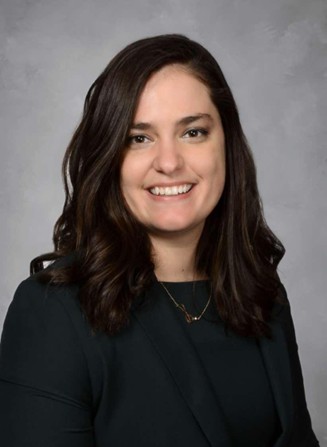 Dr. Hannah Shoaf
Dr. Hannah Shoaf is a first-year resident in the combined internal medicine-pediatrics residency program at ECU Health in Greenville, NC and a graduate of LMU-DCOM. She completed a bachelor’s in biological physics and Hispanic linguistics at the University of North Carolina at Chapel Hill and a master’s degree in physiology at NC State University. She is passionate about providing care to underserved patients, particularly Spanish-speaking. Dr. Shoaf enrolled in the FACTS elective as a medical student after witnessing a family go through several rounds of IVF without conceiving. She is grateful for the opportunity to learn more about FABMs to provide more well-rounded care to her patients.
Inspired by what you read?
You can support the ongoing work of FACTS here. To connect with a member of our team, please email development@FACTSaboutFertility.org. Interested in becoming an individual or organizational member? You can learn more and register here. To discuss with a member of our team, please email membership@FACTSaboutFertility.org.